How fine should I sand a wood floor before applying finish?
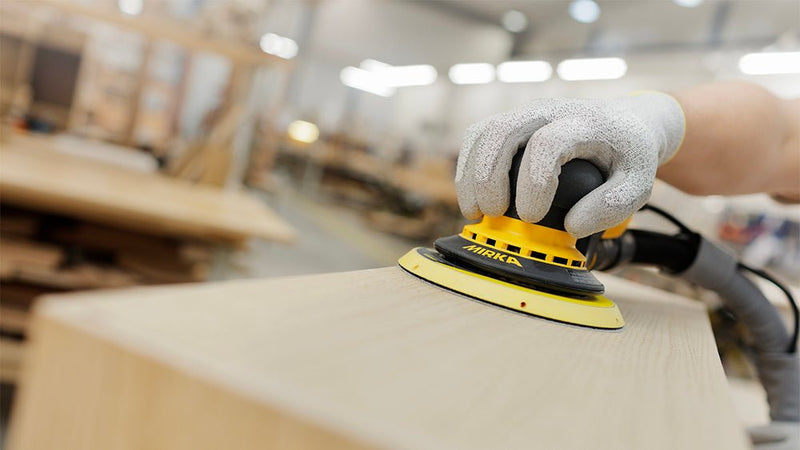
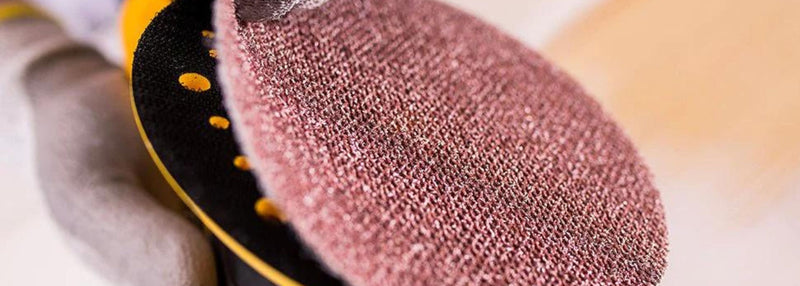
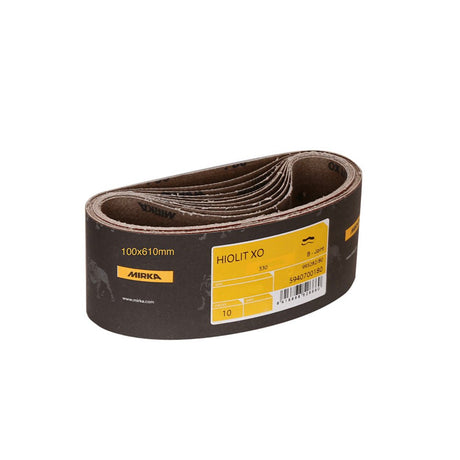
Effective preparation is key for a wood floor. Uneven sanding, scratches left by a previous grit, or inadequate dust removal can all become very obvious once the finish is applied. A consistent sanding sequence and effective dust extraction are therefore just as important as choosing the right coating. Mirka Abranet provides dust-extracting sanding for floor preparation, while Mirka's range also includes abrasives in the larger formats used with floor sanding equipment. There isn't one grit that suits every floor or finish. The final grit needs to take account of the wood species, the condition of the floor, the finish being applied, and the manufacturer's recommendations. For example, Osmo Polyx Oil specifies P120–P150 for floors before application, while the preparation requirements for a Bona lacquer system may differ.
Can I apply a new floor treatment over an existing coating?
Not without establishing what the existing coating is and whether the new product is compatible with it. In many cases, the old finish will need to be removed or sufficiently abraded to provide a suitable surface for the new coating. Products such as Bona Traffic HD and Osmo Polyx Oil have specific preparation requirements, so the manufacturer's instructions should be followed rather than assuming one finish can simply be applied over another.
What is the difference between a floor lacquer and a hardwax oil?
They protect the wood in different ways and produce a different look and feel. A lacquer such as Bona Traffic HD forms a protective coating over the surface, while Osmo Polyx Oil penetrates into the wood and leaves a microporous, lightly waxed surface. The choice therefore depends not just on durability, but also on the appearance, feel, maintenance requirements, and type of floor being finished.
How do I deal with small gaps or damaged areas before finishing a floor?
The repair needs to be completed as part of the preparation rather than trying to hide defects with the final finish. Bona Mix & Fill is designed for filling gaps in wood floors and can be mixed with sanding dust from the floor to help achieve a closer colour match. Once the repair has been sanded level, the floor can be prepared for its chosen finish.
When should I use a stone floor sealer?
Use a sealer when you need to protect porous stone from absorbing water, stains, food oils, and grease, particularly in areas where the floor will receive regular traffic. Liberon Natural Finish Stone Floor Sealer is a good option when you want to protect the stone while keeping its natural colour and appearance; Liberon Colour Enhancing Stone Floor Sealer is better when you want to deepen and emphasise the natural colour as well as protect it. Both also help reduce dusting and crumbling. The number of coats depends on the porosity of the stone, and the water-drop test can be used to check whether it has been sufficiently sealed.
Can I use varnish on a stone floor?
For porous stone, a penetrating sealer is generally more appropriate than a conventional floor varnish because it protects the stone without covering its natural texture with a conventional film. Liberon Natural Finish Stone Floor Sealer penetrates the stone and makes it resistant to water, stains, food oils, and grease while retaining its natural appearance. Once sealed, you can use Liberon Stone Floor Wax for a traditional satin lustre and added resistance to staining, scratching, and scuffing, or Liberon Stone Floor Shine where you need a more durable, higher-sheen coating, particularly in higher-traffic areas.
What's the difference between stone floor wax and wood floor wax?
The important difference is the surface each product is designed to protect and how it behaves on that surface. Liberon Stone Floor Wax is designed for stone, slate, terracotta, quarry tile, and similar surfaces; it gives a slip-resistant satin lustre while helping protect against staining, scratching, and scuffing. It should be applied over a suitable stone sealer on porous surfaces. For wood, products such as Jenkins Paste Floor Wax are intended to nourish and protect wooden floors while providing a traditional wax finish. Choosing the appropriate wax means the product is working with the characteristics of the substrate rather than simply adding a generic coating.
What's the best way to apply a sealer to a stone floor?
Start with a genuinely clean, dry surface, because dirt, grease, and residues can prevent the sealer from penetrating evenly. Liberon Stone Floor Cleaner is designed to remove dirt and grease from sealed and unsealed interior stone and terracotta, including stubborn staining. Once the floor is dry, apply Liberon Natural Finish Stone Floor Sealer evenly with a brush and allow it to dry before carrying out the water-drop test. If water is still being absorbed after 10-15 minutes, apply another coat. This is more reliable than simply applying a fixed number of coats because porous stones can require different amounts of sealer.
How should I clean my stone floor before applying a finish?
The objective is to remove the dirt, grease, old treatment, and residues that could interfere with the new finish. Liberon Stone Floor Cleaner can be diluted for general cleaning or used neat on stubborn stains, and can also remove an existing layer of Liberon Stone Floor Shine. Once cleaned, rinse thoroughly and allow the floor to dry completely before sealing or waxing. This is particularly important with porous stone, where moisture or contamination left in the surface can affect the subsequent treatment.
The high-traffic areas of my wood floor show signs of wear really quickly. What can I do?
First consider whether the existing finish is simply not durable enough for the level of traffic. Bona Traffic HD is designed specifically for demanding floors, with high resistance to scuffing and chemical damage and a full-use cure time of around 12 hours, making it particularly suitable for busy domestic and commercial environments. If you'd prefer an oil-based system rather than a lacquer, Osmo Polyx Oil or Fiddes Hard Wax Oil provide durable, repairable finishes that don't form a conventional film over the wood. For an existing oiled floor, localised maintenance can also be much simpler because worn areas can be treated without necessarily sanding the entire floor.
What's the best way to colour-match the varnish to the floor?
Rather than trying to colour the varnish itself, establish the colour first and use the clear finish to provide the protection. Mylands Light Fast Spirit Wood Stain and Fiddes Light Fast Water Stain give you different ways to build the required colour, while pigments can be useful where a more controlled adjustment is needed. Once the colour is right, a compatible clear floor finish can be applied over it. Always test the complete combination on a sample or inconspicuous area first, because the final colour will be affected by the original wood, the stain, and the finish applied over it.
Is an oil-based or spirit-based stain best for my wood floor?
It depends on the wood, the colour you're trying to achieve, and - most importantly - what you intend to apply over it. A spirit-based stain such as Mylands Light Fast Spirit Wood Stain dries quickly and can provide strong, controllable colour, while an oil-based stain gives you different working and penetration characteristics. The key is to choose a staining system that is compatible with the final floor treatment rather than choosing purely on the basis of whether it is oil- or spirit-based.
What if I need a floor sanding or finishing product that isn't in this collection?
If you need a product that isn't currently listed in the collection, call the Restorate office on 01285 831668 and we can order it for you. Our office is open 8am–5pm, Monday to Friday, and orders placed before 4pm are eligible for next-day delivery, subject to product availability.





 £111.25 £92.71 ex vatUnit price Translation missing: en.products.product.price.unit_price_separatorUnavailable
 £109.88 £91.57 ex vatUnit price Translation missing: en.products.product.price.unit_price_separatorUnavailable
 £5.58 £4.65 ex vatUnit price Translation missing: en.products.product.price.unit_price_separatorUnavailable


 £189.16 £157.63 ex vatUnit price Translation missing: en.products.product.price.unit_price_separatorUnavailable

 Sold out
 £101.22 £84.35 ex vatUnit price Translation missing: en.products.product.price.unit_price_separatorUnavailable
 Sold out£101.22 £84.35 ex vatUnit price Translation missing: en.products.product.price.unit_price_separatorUnavailable
 £16.70 £13.92 ex vatUnit price Translation missing: en.products.product.price.unit_price_separatorUnavailable

 Sold out£65.74 £54.78 ex vatUnit price Translation missing: en.products.product.price.unit_price_separatorUnavailable
 Sold out£45.96 £38.30 ex vatUnit price Translation missing: en.products.product.price.unit_price_separatorUnavailable
 Sold out


