If you've explored Cheltenham and the surrounding Cotswolds, chances are you've encountered the work of artist Sophie Ryder. From her iconic Minotaur and Hare on Cheltenham's Promenade to sculptures found across the UK and internationally, her distinctive creations have become instantly recognisable.
As one of Britain's leading contemporary sculptors, Sophie has spent more than four decades developing a distinctive artistic language that combines mythology, imagination, and exceptional craftsmanship.
For every bronze sculpture she creates, protecting and maintaining the carefully developed surface finish is just as important as making the sculpture itself. We recently visited Sophie in her Cotswold studio, where she explained her bronze finishing process and showed us the products she uses to ensure she gets the look she wants. See the full video below.
The inspiration behind the sculptures
Animals have always been central to Sophie Ryder's work, but rather than depicting them realistically, she uses them to explore human relationships, emotions, and mythology. One of her earliest inspirations was the Minotaur - the half-man, half-bull creature of Greek mythology - which fascinated her from school days. Rather than portraying the Minotaur as a fearsome monster, Ryder reimagines him as a thoughtful, gentle character, and has described him and the Lady Hare as "opposite forces" that can exist together or independently.

The Lady Hare emerged as a natural companion to the Minotaur after Ryder moved to the Cotswolds, where her beloved lurcher would regularly return from walks carrying hares. Looking for a female counterpart to her Minotaur, she imagined a woman's body with the head of a hare. The hare's long ears, she says, "seemed to work perfectly", creating a figure that felt as though she had always belonged in myth and folklore. More than thirty years on, these hybrid characters remain at the heart of her work. As Ryder puts it, "I never get bored of them - these characters are part of my language. They're my people!"
From wire sculpture to monumental bronze
Many of Sophie's sculptures begin life in her Cotswold studio as wire or plaster originals before being transformed into bronze using one of the oldest metalworking techniques still in use today: the lost-wax casting process.
A very detailed wax replica is created from the original sculpture and encased in a ceramic shell. This is then heated so the wax melts away, leaving a cavity into which molten bronze is poured. Once cooled, the bronze is cleaned, welded, finished by hand and prepared for patination.
Creating the patina
The distinctive colours of Sophie's sculptures aren't painted on - they're created through patination.
The bronze is heated before specialist chemicals are applied, creating a controlled reaction that permanently colours the metal. The heat causes a controlled chemical reaction on the surface of the bronze, producing permanent colours that become part of the metal itself rather than sitting on top like paint.

Sophie primarily works with two finishes:
- Copper sulphate, which creates the soft blue-grey tones that have become synonymous with many of her sculptures.
- Ferric nitrate, which produces warm rusty browns inspired by weathered iron.
Both are applied over a dark base, called a "liver" patina that gives the finished surface depth and character.
Unlike paint, these patinas remain part of the bronze surface. However, without protection they continue reacting with the environment and can quickly deteriorate.
Protecting the patina
"If you don't wax a piece immediately after it's been patinated," she explains, "the patina will change dramatically. It can wash away or alter very quickly, especially with acid rain or sea air."
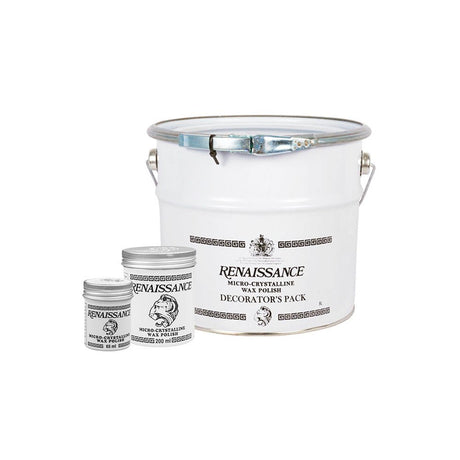
Once the patina has fully cooled, Sophie applies a protective coat of Renaissance Wax. This highly refined microcrystalline wax provides durable protection from rain, atmospheric pollution, moisture, oxidation, and everyday handling - but doesn't affect the appearance of the patina. It forms an invisible protective barrier that helps protect the patina, which otherwise would gradually weathers and eventually darkens beneath a natural black oxide layer.

Rather than polishing to a high gloss, Sophie uses a large, clean brush to work a thin layer of Renaissance Wax across the textured bronze surface before leaving to dry for 10-15 mins and then lightly buffing it. Unlike many household waxes and polishes, it contains no silicones or other additives that could alter the carefully developed finish or introduce an unwanted shine.
As she explains: "We don't want it interfering with the chemicals already on the bronze. We don't want a shiny finish – we want a slightly matte finish."

Looking after outdoor sculpture
As well as protecting her sculptures with Renaissance Wax, Sophie uses Liberon Black Patinating Wax followed by Liberon Verdigris Wax to disguise small areas of discolouration and help blend them back into the surrounding patina.
Traditionally, these coloured finishing waxes are used in furniture restoration and decorative finishing to create an aged appearance on newer replacement wood, enhance mouldings and carvings, or add depth and character to painted finishes. Sophie has adapted them for a very different purpose, using their subtle pigments to carefully tone small areas of bronze without affecting the overall appearance of the sculpture.
Rather than brushing the waxes on in solid, even strokes, she gently dabs them onto the surface using a large, clean brush. This avoids introducing blocks of uniform colour, allowing the pigments to blend naturally with the existing patina while preserving the subtle tonal variations that make each sculpture unique.

Preserving the artist's vision
Sophie Ryder's approach to bronze sculpture demonstrates that preserving a work of art is every bit as important as creating it. Through a combination of traditional foundry techniques, carefully developed patinas and sympathetic finishing methods, she ensures each sculpture retains the character and subtle colour variations that define her work.
Her meticulous process shows how traditional craftsmanship and specialist conservation products can work together to preserve both the artwork and the artist's original vision.
Shop the products

Renaissance Wax: Trusted by museums and restorers around the world, this micro-crystalline wax can be applied to wood, metal, leather, parchment, marble, stone, and silver. Many of our customers use it to keep brass doorhandles looking like new. Its pH neutral formulation contains no damaging acids, making it particularly suitable for sensitive surfaces and antiques. It provides durable protection without compromising the original appearance of the surface.

Liberon Black Patinating Wax is a versatile finishing wax designed to create aged, distressed and antique-style effects on furniture and decorative surfaces. It's popular with furniture restorers for recreating the dark wax build-up that naturally develops around mouldings, carvings, and decorative details over decades of use, helping new work or repairs blend sympathetically with the appearance of genuine antique furniture.

Liberon Verdigris Wax produces green hues of oxidised copper and brass. It can create decorative faux finishes or add subtle colour variation to furniture, picture frames, and interior details. Restorers often use it where small areas of aged metalwork or decorative finishes need sympathetic colour matching.
Need help? If you'd like to know more about these products, please give us a call on 01285 831668 or email info@restorate.co.uk.