Walk into almost any professional joinery shop, cabinetmaking workshop, or furniture manufacturer and there's a good chance you'll find a bottle of Titebond on the bench. For decades, it's been the adhesive of choice for professional woodworkers who demand adhesives that fit seamlessly into their workflow.
Whether you're building bespoke furniture, manufacturing kitchens, fitting joinery, or producing architectural timberwork, choosing the right wood glue is just as important as selecting the timber itself. But with several different products available, what makes Titebond the first choice for so many professionals? Which version is right for your project? And are there situations where a more affordable alternative makes sense?
 Why do professionals choose Titebond?
Titebond has earned its reputation over decades of professional use. It's trusted not because it's simply "stronger" than other wood glues, but because it offers specialist formulations with working characteristics tailored to different woodworking applications. Key advantages include:
- Excellent initial tack to help keep joints in position during clamping.
- High bond strength that often exceeds the strength of the timber itself.
- Excellent sanding and machining characteristics once cured.
- Specialist formulations for interior, water-resistant and waterproof applications, with different open and assembly times to suit everything from fast production work to larger, more complex glue-ups (see comparison table below).
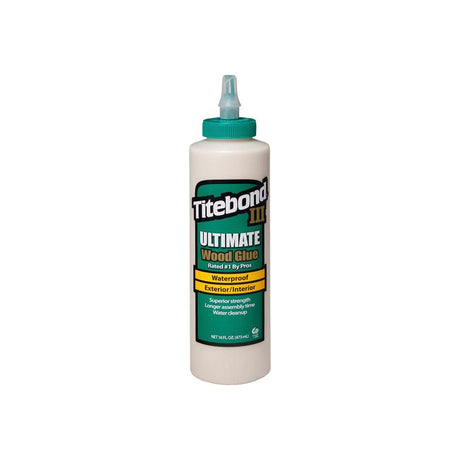
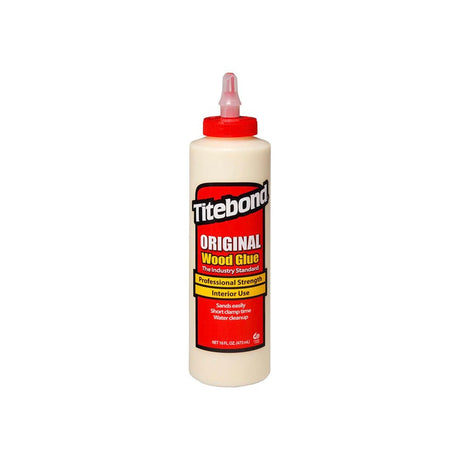
Professional woodworkers also appreciate the small details that make everyday use easier. Titebond's distinctive nozzle dispenses the glue in a flat bead rather than a round one, making it quicker to spread evenly across mating surfaces while reducing waste. The twist-cap forms an airtight seal when closed, helping prevent the nozzle from clogging and reducing the risk of the adhesive drying out between uses.
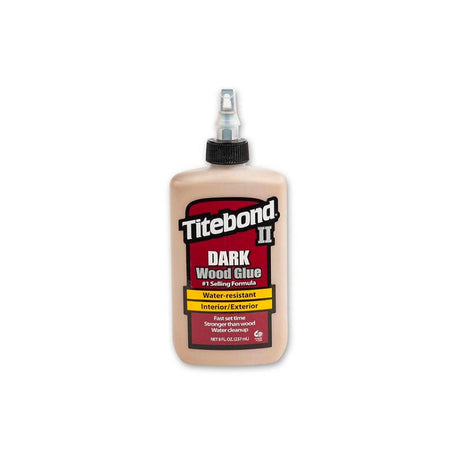
Another often-overlooked advantage is the appearance of the cured glue line. Unlike traditional white PVA adhesives, Titebond Original dries to a yellow colour, while Titebond II Premium is also available in a Dark version that blends more naturally with timbers such as oak, walnut and mahogany. Although excess glue should always be removed before finishing, a less noticeable glue line provides added reassurance when working with high-quality timber.
Which Titebond is right for your project?
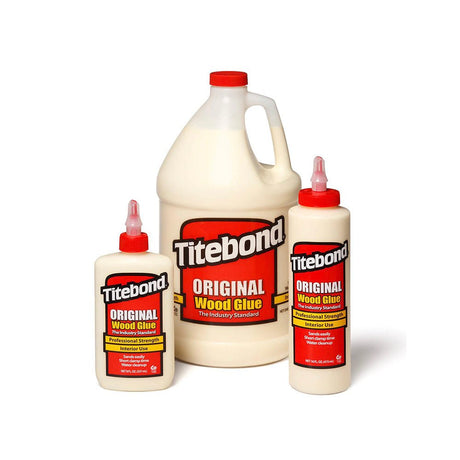
 Titebond Original Wood Glue is the brand's classic yellow aliphatic resin wood glue and remains one of the most popular choices for interior woodworking. It develops a strong initial tack, is easy to sand once cured and produces a bond that's often stronger than the wood itself. Titebond Original is unaffected by most wood finishes, making it suitable for projects that will be stained, varnished, waxed or oiled. For the best results, remove any excess glue before finishing to ensure an even appearance. It's ideal for:
- Furniture making.
- Cabinet construction.
- Joinery.
- Woodturning.
- Interior trim.
Despite newer formulations, Titebond Original remains the first choice for many furniture makers and cabinet manufacturers. Its strong initial grab helps components stay in position during assembly, while the hard glue line sands and machines exceptionally well. Where moisture resistance isn't required, many professionals still prefer Original because it allows them to work quickly without compromising bond strength.
It's consistently rated 5 stars on our site and reviews include:
- "First class wood adhesive, fast grab with extremely good adhesion."
- "It lives up to its reputation - bond is stronger than the wood itself."
- "The best off-the-shelf wood glue available."
- "I have used this make for twenty odd years and would not use any other now."

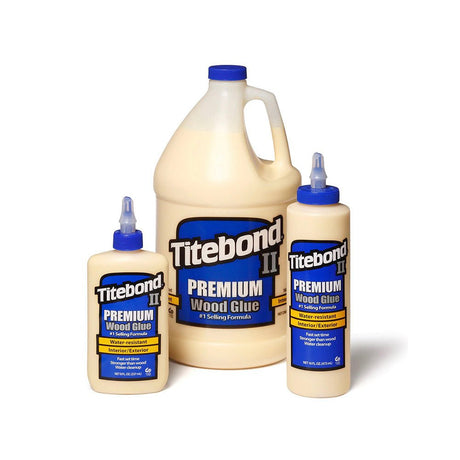
Titebond II Premium bridges the gap between Original and III. It provides water resistance, making it suitable for projects exposed to occasional moisture, while retaining the faster handling characteristics that many workshops prefer over fully waterproof adhesives. For these reasons, Titebond II has become the everyday workshop adhesive for many professional joiners.
Common uses include: kitchen and bathroom; cabinetry; interior doors and windows; and garden structures with limited weather exposure.
Again, it's a consistently top rated product and our customers say:
- "Always use this glue, it's never let me down. excellent product."
- "Very good wood glue, has a nice nozzle for dispensing glue."
- "Experience and learning curves tell you what works best - and, for me, that's Titebond. No other will ever enter my workshop again."

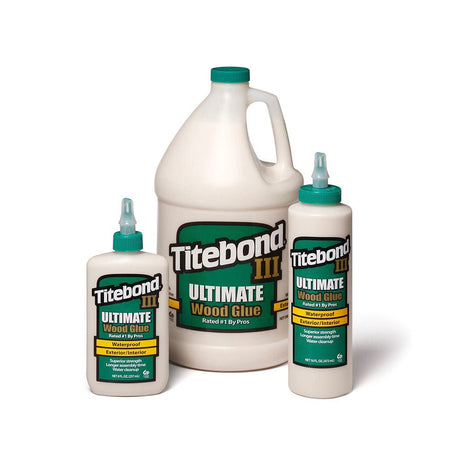
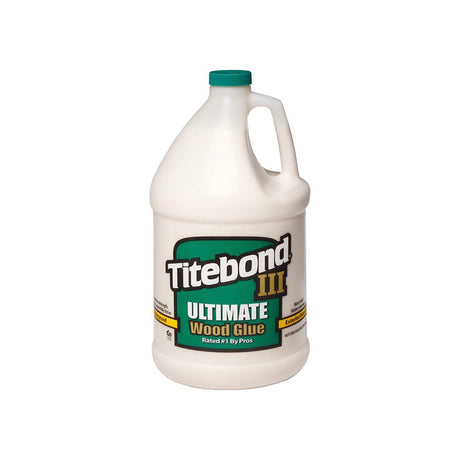
Titebond III Ultimate is designed for applications where maximum durability and extended working time are essential. In addition to being completely waterproof (even submerged, it goes rubbery, but is unlikely to fail), it offers a longer open assembly time than Original or II, giving users more time to position complex assemblies, larger glue-ups and exterior joinery before clamping. Its benefits include:
- Waterproof bond.
- Longer open assembly time.
- Superior strength.
- Suitable for indoor and outdoor use.
- Food-safe when fully cured for indirect food contact applications such as chopping boards.
Top rated for its versatility, just some of the customer comments include:
- "Favourite wood glue for most of my work."
- "The best glue for all outside applications I've found."
- "Plenty of wriggle/adjustment time to fit clamps. Stronger bond and better filling ability than gorilla glue. Less messy too."
- "I always use this glue now. It's good to know it can take exterior conditions and it is easy to clean off the excess. It doesn't seem to stain clamps and sash clamps like Titebond 2."
- "The best wood glue that there is in my opinion. I run a joinery manufacturing business and switched to Titebond 3 around 5 years ago and we have never had even one issue with it."
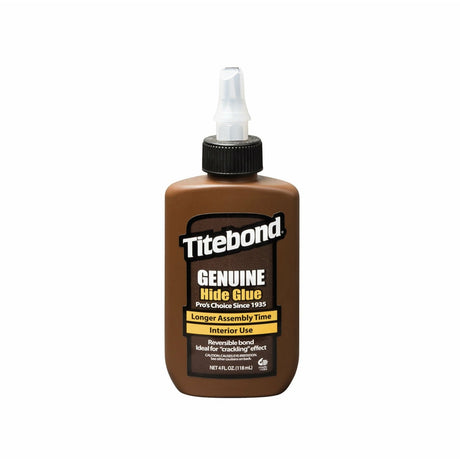
Titebond Hide Glue is for restorers and furniture makers working on traditional pieces. It offers all the advantages of classic animal hide glue - including good initial tack, minimal creep, and traditional appearance - without the need for heating or mixing.
It's particularly popular for antique restoration because the bond can be reversed with heat and moisture, making future repairs possible without damaging the original piece. It's ideal for:
- Antique furniture restoration.
- Period furniture repairs.
- Musical instruments.
- Traditional joinery.
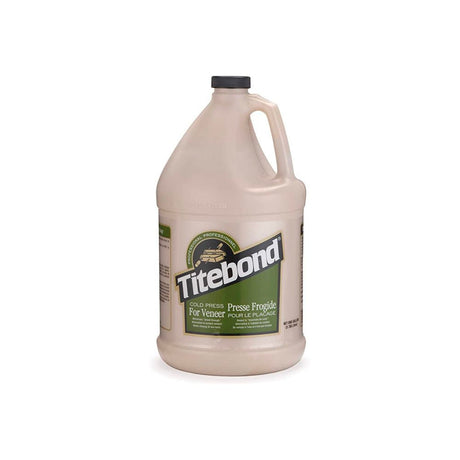
Titebond Cold Press Veneer Glue is a high-quality, cost-effective alternative to traditional contact cements for furniture makers and cabinet manufacturers working with veneers. It's specifically formulated for cold press laminating, providing a strong, reliable bond when adhering wood veneers to solid timber, MDF, plywood, particleboard and other porous materials.
Unlike many contact cements, Titebond Cold Press offers a moderate set time, giving you longer to accurately position veneers before the adhesive cures. It dries to a translucent glue line, contains no harmful or corrosive fumes typically associated with contact cements, and is specially formulated to prevent bleed-through on open-grained and unbacked wood veneers. It's ideal for:
- Veneering furniture and cabinetry.
- Laminating veneers to MDF, plywood, particleboard and solid timber.
- Large, flat veneer applications.
- Professional joinery and cabinet making.
- Projects where a clean, invisible glue line is essential.

Are there any challenges with Titebond?
No adhesive is perfect for every application, and Titebond is no exception. Some considerations include:
- Premium performance comes with a higher price than many standard PVA adhesives.
- Choosing the wrong formulation can limit performance - for example, using an interior glue outdoors.
- Waterproof versions generally have longer curing times.
As with any woodworking adhesive, good surface preparation, and correct clamping remain essential for achieving the strongest possible bond.
Are there more cost-effective alternatives?
If you're carrying out general DIY repairs or occasional woodworking, a quality D3 or D4 PVA adhesive from another reputable manufacturer may provide all the performance you need at a lower price. Alternatives worth considering include:
- General-purpose D3 wood glues for interior projects with occasional moisture exposure.
- D4 wood glues for external joinery and high-humidity environments.
- Specialist construction adhesives where flexibility or gap filling is more important than traditional wood joints.
For many everyday applications, these products can represent excellent value. However, many professional workshops continue to choose Titebond for its strength, reliability, and because the range offers specialist formulations for different applications.
Selecting the right Titebond for your project
The reason Titebond has remained a workshop favourite for decades is simple: it offers specialist adhesives for specialist applications. Whether you need fast grab for interior joinery, added water resistance for kitchens and bathrooms, or a waterproof adhesive with extended assembly time for exterior work, choosing the right formulation will help you achieve the best possible results.
If you're unsure which Titebond product is right for your application, give us a call on 01285 831668 or email info@restorate.co.uk - we'd be happy to help.